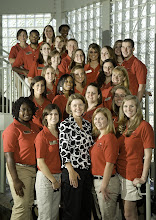
This week I want to share with you about a great office on campus that is commonly referred to as the best kept secret on campus. Through this office, you can meet many great people, help participate in exciting service projects, and help your community, among many other things. This office is the Center for Service, Leadership, Ethics, and Public Service, commonly referred to as CSLEPS. During my high school years, I participated in volunteer work; when coming to college, I wondered how I could continue this involvement. I never imagined there was an office on NCSU campus committed to helping our community by getting students involved and preparing them to be future ethical leaders.
My freshman year I participated in Service NC State, which was in collaboration with an organization named Stop Hunger Now. Students from NC State, neighboring colleges, and even some community members come together on the first Saturday after classes started to put together packaged meals to be sent across the world. In 2008, we packaged over a million meals in just a few hours. Everyone had such a wonderful time during the event, and it passed really quickly. It was amazing to see what can be accomplished in such a short amount of time.
Alternative Service Break trips are other great opportunities offered through CSLEPS. Trips are during Christmas break and spring break. There are international and domestic trips, including everything from helping Habitat for Humanity, alleviating health issues, and teaching English in various countries. Many different interests are involved, and students from all different majors participate. This past spring break, I went to the Dominican Republic on a health issues trip. I had an amazing time interacting with the local people and learning about their culture. We toured their hospital and taught health lessons in the schools. Everyone should take advantage of these trips because you can learn so much, especially about appreciating what you have.
Leadership training is another service offered by of this office. Many great presenters offer workshops on various aspects of leadership that CSLEPS has carefully selected. By attending these workshops and doing a portfolio of service, you can earn a certificate, which employers look upon highly. These workshops have allowed me to look at things in a new perspective.
This past year, I worked with CSLEPS as a Service-Leadership Consultant, planning events and helping lead service projects. We were ambassadors for CSLEPS and helped wherever we were needed. This year this group has been absolved, and paid internships have been put into place. A group of interns over various aspects of CSLEPS have been appointed, and they will form committees where you can get involved with your specific interest and the planning behind events.
There are so many opportunities through the CSLEPS office that I simply cannot describe them all to you here. To learn more, visit their website and see for yourself what all they have to offer. http://www.ncsu.edu/csleps/index.php
Wednesday, November 18, 2009
Clubs on Campus
Fun people, free food, and good networking – that is what the Agribusiness/NAMA (National Agricultural Marketing Association) Club is all about!
An advantage of being a student in the College of Agriculture and Life Sciences at NC State is being given the opportunity to be involved in clubs. Just within CALS, there are over 44 different clubs and organizations students can choose from! Clubs differ not only in their meeting schedules, but also their overall purpose. This gives CALS students the opportunity to become involved in an area that truly interests them. However, the main purpose of CALS clubs is to challenge students scholastically, engage students in service events, and promote networking for possible internship and job opportunities.
One of the clubs I am involved in on campus is the Agribusiness/NAMA Club, the club for students studying Agricultural Business Management in the Department of Agriculture and Resource Economics. Here is an overview of what the club does: we meet every other Monday evening, there is free food served for all club members, we have at least one service event and one social event every semester, and we help with the Maola milk book at the State Fair (in the fall) as a fundraising event. We also have a professional within the agricultural industry speak about their job at every meeting, and we have an end of the semester banquet where we celebrate the successes of the semester.
The premier aspect of the club, in my opinion, is the opportunity to learn about different internship and job availabilities as we have different speakers at each club meeting. These speakers represent different aspects of the agribusiness industry. Through the networking that takes place between students and business representatives at our club meetings, it is very easy to obtain an internship; at the very least, we can obtain information about internship opportunities. Internships are key because they help a person to figure out if a specific career is ‘right’ for them. If all goes well during an internship, a job might be offered to the student once they graduate. To me, this sounds like a pretty good deal for college students!
However, the Agribusiness/NAMA Club is not the only club that promotes and focuses on networking in CALS. Explore the following website to see a complete listing of all the clubs CALS has to offer: http://harvest.cals.ncsu.edu/academic/index.cfm?pageID=395
This is just another reason, among the million, that I love being a student in CALS at NCSU!

Tuesday, November 10, 2009
What is CSI?
As a student, you may have an occasional free minute to sit down and watch the infamous “CSI” television series. This show portrays Crime Scene Investigators as nicely dressed, perfectly-styled professionals who find imperative clues at first glance. When viewing this type of show, you have to remember that that is television drama, performed by Hollywood actors.
Well, what then is a CSI? A crime scene investigator plays many roles when solving a single crime. Many hours are dedicated to retrieving, recording, and testing forensic ballistics in all aspects of the crime. For instance, DNA takes at least a week to go through processing and data
recording. On the state level, cases are backed up to a year; this is due to the number of cases and the holds placed on those cases because more pertinent cases come through the system.
Specialists deal with certain aspects of a crime. One person is specially trained in the finger-print analysis unit, while another is specialized in guns. The task of a gun specialist is to compare and identify bullets from the crime scene to potentially match those bullets with a specific type of firearm. They use water chambers and cotton-lined ranges, as well as an indoor and outdoor firing range. They compare bullets left at the scene and firing pin impressions left on the shell casings with the marks on test-fired rounds in the crime lab. If the marks on the test bullet match, the weapon has been identified. This is based on the principle that no two guns leave the same marks on the ammunition. The bullet striations and firing pin impressions are as unique as our fingerprints! The specialist can also determine range, impact and type of bullet wounds, as well as calculate the distance of the shooter from the powder stain patterns on the target. Each specialist does his or her part, and then sends the information to the investigator in charge, after which he or she receives the next order of business. The specialists are never involved in the specific details of the cases.
So the next time you find yourself watching the infamous CSI series, just remember that cases are not solved so quickly or easily.
Monday, November 2, 2009
Academic Trips
Hola! My name is Dustin Hart and I am a sophomore in Poultry Science. This week, I thought it would be fun to talk about school trips! Who doesn't love going somewhere instead of sitting inside of a classroom?
I recently took a class trip to visit Asheboro Zoological Park. My Avian Physiology class has been learning about avian behavior, so for our weekly lab, we took an all-day field trip to put our newly-learned skills into practice. At the zoo, my group decided to watch Chilean Flamingoes! We spent about two hours taking notes and utilizing the skills we had learned in the classroom as we watched our subjects. For the remainder of the day, we walked around looking at the rest of the animals at the zoo.
Needless to say, this was one of my favorite labs! We didn't just learn about how to study avian behavior, but we actually put it to use. Later we created an ethogram (a way to list avian behavior) as if we were actual researchers studying the Chilean Flamingo. We also created a 5-7 minute class presentation discussing our findings from the zoo.
Where else would you be able to get this kind of hands-on experience if not in the College of Agriculture and Life Sciences at NCSU?
Friday, October 23, 2009
Med School Bound
Hi everyone! My name is Lacey Martin. I am a junior majoring in Biological Sciences with a Human Biology Concentration. I am hoping to attend medical school following my few, great years at NC State. To reach my goal, I take advantage of the Pre-Health resources CALS has to offer; but there is so much, I cannot possibly do it all, much less mention it all here!
The key to all these resources is the Health Professions Advising Center, or HealthPAC. This office provides advising, interview preparations, entrance exam preparation materials, information on professional schools and internships, and so much more. Personally, I'm in the HealthPAC office at least once every two weeks meeting friends, asking questions, or looking at materials.
I am also about to start the application process for medical school. One thing I know I will take advantage of is the NCSU Health Professions Committee Review process. The HealthPAC website has a portfolio system which allows students to upload activities and descriptions as they complete them. That way, you don't have to try to remember everything when the time comes to apply. Also, once you complete the Medical School application, you have the option of submitting it to the review committee. This committee examines all your information and writes a recommendation for you, which is then sent to the schools to which you are applying. This committee review is nationally recognized. Of course, you're not required to use this resource, but it is definitely a great option!
I am also a member of the Pre-Health Club. This club meets once per month and holds many different workshops, as well as hosts various speakers, all of which help the members prepare for applications, interviews, professional school, and our future careers in the medical field. The Pre-Health Club also holds many different service events throughout the year which members can take advantage of. In order to meet the needs of every member, the club is divided into ten different interests group. These groups include the Pre-Medical, Pre-Dental, Pre-Optometry, and Pre-Pharmacy groups, as well as many others. Each of these groups meets at a different time of the month. There are also two medical-related honor societies: Alpha Epsilon Delta (Pre-Medical) and Delta Delta Sigma (Pre-Dental). These societies also meet for workshops, service activities, and social events.
Right now, I am in a class called “BIO 295” on campus. This class meets on Tuesdays for 75 minutes. We have a wonderful Kaplan instructor who teaches us critical thinking skills that help on tests like the MCAT, PCAT, DAT, or OAT. These are the standardized tests you must take to get into professional school (sort of like your high school SAT). Also, for an amazingly low price we received a full set of brand-new, newly-revised Kaplan MCAT test preparation books! No other school in the area has this! The idea behind this course is that by beginning it as a freshman and continuing it every semester, you will have four full semesters of it completed by the time you take the test (usually in your junior year). This is the equivalent of a full preparation course. It is just spread over an extended period, which is much more preferable than cramming all of this information into just a few months before you take your exams!
I know all of these options can seem overwhelming, but keep in mind everything is optional. These are simply a few of the ways NC State and CALS helps prepare you for your next step after college. If you work hard and participate in these activities, you will get so much out of it -- not just another entry on your resume, but a lot of friends, support, and fun!
Lacey
For more info:
HealthPAC: http://harvest.cals.ncsu.edu/health_pac/
Pre-Health Club: http://clubs.ncsu.edu/premed/
Tuesday, October 20, 2009
Dining Options
Eating Out-
NC State students have a wide variety of off campus food options. There are four well patronized eating locations within walking distance of campus: Hillsborough Street, Western Boulevard, Mission Valley Shopping Center, and Cameron Village.
Hillsborough Street (directly across from the NCSU library) offers students about 25 restaurant, bar, café, or deli options. There is a little something for every culture and palette, with Mexican, Greek/Mediterranean, Indian, American, Chinese, Japanese and Italian options ranging from casual to fine dining.
Western Boulevard (between Main and Centennial campus) is home to many well known convenience food options including McDonalds, Wendy’s, Bojangles, and Pizza Hut. A student favorite, Cookout (an all American hamburger and milkshake joint) is also located here.
Mission Valley Shopping Center (on the corner of Western Boulevard and Avent Ferry Road) is like Hillsborough Street in that it offers a broad selection of cultural food. Ethiopian, Oriental, and Mexican restaurants are among American delis, cafes, and bars.
Cameron Village (off of Oberlin Road, about 5 minutes driving from campus) is the longest walk from campus so students typically drive. The restaurants, amid local shops and boutiques, are convenient for lunch between shopping. The village’s reasonably priced American style bars and grilles make this location well known for its thriving nightlife, and the perfect spot for a date or a night out with friends.
Most of these restaurants offer discounts or daily specials for students. Coupons can be found in the Technician (our university newspaper) and at Talley Student Center.
Additional information on off campus eating:
http://www4.ncsu.edu/~misra/LieConf2005/foodguide.pdf
Eating In-
Students can also prepare their own meals. Food Lion (with Western Boulevard and Avent Ferry Road locations) is closest to campus. The Avent Ferry location is on NC State’s Wolfline bus route, which provides transportation for students without a vehicle. Harris Teeter (in Cameron Village) is also a popular option.
One of the most cost efficient and sustainable locations to purchase produce is the North Carolina Farmers Market (off of Lake Wheeler Road, about 5 minutes driving from campus). Local farmers sell fresh fruits, vegetables, eggs, meat, nuts, cheese, milk, bread, pastries and more. This semester, NC State University worked in collaboration with the NC Farmers Market to provide weekly markets on campus.
North Carolina Farmer’s Market website:
http://www.ncagr.gov/markets/facilities/markets/raleigh/index.htm
Hope this helps in choosing from NC State’s wealth of off campus food options. Happy eating!
-Erin Whitley
Monday, October 19, 2009
Off-Campus Medical Opportunities
Medical School: many people want to attend, few are admitted. So, what can you do to set yourself apart? And what resources can you find in Raleigh to assist you in attaining that acceptance letter? Whether conducting research, shadowing, or volunteering, N.C. State is surrounded by numerous opportunities to not only strengthen your resume, but also allow students to attain the experience necessary for medical and other professional schools.
Research is one essential aspect of a CALS student’s experience: it emphasizes discovery-based instruction to students not attainable in lecture halls. Conveniently, N.C. State is located adjacent to Research Triangle Park. RTP harbors many honorary individuals, including recipients of the Nobel and Pulitzer Prizes, in addition to winners of the National Science Foundation Award and Presidential Award. Presently spanning 6,971 acres, Research Triangle Park is considered a “center of innovation.” This provides NC State students with an awesome (and convenient) opportunity to gain unique, discovery-based education through hands-on instruction.
If you are seeking shadowing experience or internships, NCSU is located a mere 4 miles from REX Hospital, and within 10 miles of WakeMed Hospital. If you want to branch out and experience individual practices, Raleigh is filled with fine facilities at which you can expand your outlook on medicine. I currently shadow an attending physician in WakeMed’s Emergency Department. The diversity of illnesses and interactions with patients I witness in just an eight hour day is amazing. Dr. Saad advises me to “doctor hop,” allowing me to not only observe a variety of patients but also a variety of physician’s diagnostic methods of treatment. Whether grabbing lunch with a doctor and discussing different aspects of medicine, or learning what to look for on a CT scan or X-ray, the physicians and faculty at WakeMed have significantly strengthened my knowledge of the medical field.
Volunteer opportunities in Raleigh are also very prevalent. There are countless organizations in need of assistance, and they are more than happy to receive help from N.C. State students. Students can discover and learn more about these volunteer opportunities through on-campus clubs, the CALS Career Services Office, and the CSLEPS (Center for Student Leadership, Ethics, and Public Service) website. These resources can all help you find the volunteer program that is right for you. I utilized the CSLEPS website and began volunteering at the medical clinic at Urban Ministries over a year ago.
So yes, the competition for acceptance to Medical School is tough. Fortunately, N.C. State and Raleigh have more resources than you can imagine, helping you create your own unique resume and compete with the very best applicants.
Monday, October 5, 2009
Pre-Vet
Alright, so you think you want to be a vet “when you grow up.” First and foremost, understand that this is an extremely competitive field. There are only 28 vet schools in the nation, and there are plenty of students vying for these few admission seats every year. Don’t get discouraged though – just realize that becoming a vet requires a lot of passion and determination. If you think this is the area you’d like to go into for your career, start preparing NOW! Go talk to your local vet and ask them if you can volunteer. Shadow a large animal veterinarian in your area. And when you get to college, start animal-related research projects.
This is where CALS at NC State can help you. CALS faculty are constantly looking for undergraduate help in research projects. Though some of these projects may be unpaid, you can instead receive class credit in most situations. Personally, I became involved in research the summer before my freshman year, and have continued working in the lab ever since. I participated in the HHMI RISE Program, a 6-week summer research internship for incoming freshman, and began working in a poultry genomics lab on main campus in Scott Hall. Since then, I have presented three times at undergraduate research symposiums, and have even traveled to Australia to present my research at the 2008 World Poultry Congress.
But obviously research is not the only thing you need to focus on when it comes to building your resume for vet school; you also need to have a well-rounded body of veterinary and animal experience. This includes everything from assisting a large animal vet with restraint of a patient during an exam, to walking dogs for your neighbor. Just make sure you keep a log of how many hours you’re accumulating in each of your experiences – this will make applying to vet schools (and even filling out your resume) a much smoother process later!
When it comes to finding these fantastic internships, CALS Career Services is an invaluable resource. CALS is constantly sponsoring workshops to help guide you in your quest for internships, and networking events to help connect you with a professional who may be able to provide just that. The key here is that CALS Career Services is what you make of it. None of the events are mandatory; but of course, the more you participate, the more you will get out of them. So be proactive and take advantage of the resources made available to you! Coming this fall to CALS is an exciting new program called VET Pac! The program will reside in Riddick Hall, and will essentially be a mentoring program strictly for pre-veterinary-focused students. Faculty in the program will help students find internships, connect with local veterinarians, and most importantly, perfect those vet school applications!
My best advice is just to get out there and try things. Dabble in small animal medicine, give large animal practice a try, and even explore the field of exotic animal care. What is even more important than getting into vet school is making sure that being a veterinarian is really your dream career. And after all of that experience you decide you really do want to be a veterinarian, then you will already be well on your way!
Thursday, October 1, 2009
University Scholars
When I first heard about University Scholars, I thought it sounded like another program that would benefit me academically. My first impression has definitely proved to be true! The Scholars program requires you to take honors courses and attend lectures on a variety of different subjects. I was very excited to Scholars would provide me with the opportunity learn about topics of business, engineering, and the arts, as I am a Biological Sciences major and do not have much exposure to these topics otherwise. University Scholars has also made me a more informed person; because of the program, I now make reading the news part of my daily routine. What is more, the community and trips the program has provided me with have ended up being one my favorite things about my freshman year here at North Carolina State University. Because scholars offered free transportation and tickets, I was able to see professional productions in Raleigh, Chapel Hill, and Durham. I even participated in a weekend trip to Virginia to see a Shakespeare play. I was so impressed with how the program helped to broaden my perspectives.
Although all these experiences were amazing, my very favorite activity was the Fall Break Backpacking trip. University Scholars offers a few trips each semester with the Outdoor Leadership Series. Having never backpacked before, I thought it would be a great opportunity to try something different and meet new people. This four-day excursion ended up being one the best outdoor trips I have ever been on because of great friends, leadership building, and the beautiful scenery. It was a great break from being on campus, and I learned much about myself and about surviving outdoors.
University Scholars has been a fantastic program for me and I highly recommend it to anyone who interested in learning about the world and what it has to offer. So if you have ever wanted to learn a native African dance, or travel downtown to see an original play, scholars might just be the program for you!
Wednesday, September 30, 2009
Fun Things to Do On Campus
Hi everyone! My name is Lauren Hysong and I am a senior in biological sciences in the College of Agriculture and Life Sciences here at NC State. As my roommates and I are getting ready for this weekend’s football game against Pittsburgh (Go Pack!!!), I wanted to take a moment to tell you about all of the fun things that go on around campus. As most of you know, it’s football season, which is a notably exciting time among State students. Home football games are a great time to hang out with friends, show your school spirit, and have a lot of free fun. And not long after the excitement of football season, NC State basketball games roll around. There’s nothing like seeing the RBC Center full of NC State fans cheering on our basketball team! And though football and basketball are the two most popular sporting events to attend on campus, NC State also has a wide variety of other ACC sports that have games on campus all the time. Soccer, volleyball, baseball, softball, tennis, gymnastics and wrestling are all excellent programs that win numerous ACC and national titles and always put on a great show for students. And did I mention it’s all free for students??
Not a big sports fan? That’s fine--Arts NC State has a wide variety of shows and performances all around campus. We just finished renovating Thompson Theatre, where numerous plays and shows are put on year-round. Center Stage brings in musicians from around the world to perform, and our Dance program puts on great shows! One of the most popular venues to attend is Stewart Theatre in Talley Student Center, where many acts perform, such as our famous male a capella group, The Grains of Time. They are great live, and I highly recommend seeing a show while you’re here! Movie fans can visit the Campus Cinema, where for just $1.50 you can see a movie not yet out on video without ever having to leave campus. They also put on free advanced screenings throughout the year so you can see movies before they hit theaters.
In addition, many clubs and organizations put on events all throughout the year. As a student at NC State, there is never a dull moment on campus. There are flyers out everywhere on campus for fun things that go on all the time! I for one can’t wait for the Women’s Center to put on their annual Chocolate Festival this October. As future students, I hope that you all take full advantage of all of the fun things that go on around here. See you at the football game!!!
Tuesday, September 22, 2009
A Day in the Life - Tailgate and Football
Hey everyone, my name is Dave Overman and I am a junior majoring in Human Biology in the College of Agriculture and Life Sciences here at N.C. State. Today I want to share with you my experience from this past weekend where I had the opportunity to attend the annual CALS Tailgate and afterwards attend an N.C. State Football game. I started my day at 8:00am when I met up with some of my fellow ambassadors at the North Carolina State Fairgrounds to set up for the Tailgate. Each year, our college chooses a Saturday with a home football game to invite all of the alumni, faculty, and current students out to have a great time tailgating and then we all go to the football game. This past Saturday morning, we spent much of our time getting Dorton Arena ready to host our tailgate. We blew up hundreds of balloons, set up all kinds of decorations, helped prepare the food, and set up display stations for some of the departments and student organizations within our college. After everything was prepared, it was time to have some fun.
Over the course of the afternoon leading up until the kickoff of the football game, we had thousands of people show up to celebrate our college with us. Numerous professors, alumni, current students, parents, distinguished faculty, and even Mrs. Wuff showed up to enjoy spending time together. Some of the activities that my friends and I got to experience at tailgate included face painting, enjoying a live band, getting some cool give-a-ways from the college, holding a snake and some crazy looking insects, homemade cookies, and seeing tons of friendly faces. We also got to eat a great lunch of good ole fashioned barbeque that was delicious! I had a BLAST at tailgate that afternoon hanging out with all of the people there.
After the tailgate was over, we walked over to Carter Finley Stadium where we got to spend the night watching our Wolfpack Football team play the Gardner Webb Bulldogs. We cheered, screamed, and celebrated as our team put on a show beating the Bulldogs. I’ve never experienced anything as exciting as a Wolfpack Football game. There is just something about atmosphere with the crowd, the students, the cheerleaders, the mascots, and the band playing the fight song. And we always close a game by putting our arms around each other in the student section and singing the Alma Mater. It is such an electric experience and one of my favorite parts about being a student at N.C. State. You get such a sense of unity by cheering on your school and showing your school pride together with your fellow students.
Well that is pretty much my experience from this past Saturday at the Tailgate and the football game. I had a blast hanging out with all of my friends at both events and I am looking forward to doing it again at the next game. GO PACK!
Friday, November 21, 2008
Diversity

I can imagine an ideal university, a place where students, employees and scholars come together from different continents and states, different religions and political viewpoints, different races and classes. In this place, these differences are the source of curiosity and robust, respectful debate, not of division and alienation. The people of this place seek out and intellectually engage those who are different to help see their own thoughts more clearly.

North Carolina State University is committed to becoming such a place, one where diversity is not measured in numbers only but in the inclusive, welcoming, and stimulating climate we all experience as members of this community. NC State has made a pledge to make a difference. In this pledge, we have outlined our goals to aggressively recruit and retain a diverse complement of faculty and students and to promote engagement and understanding across all human boundaries.

Why does diversity matter to you as a prospective student?

The purpose of a university is to expose its students to the wide range of human experience to train their minds in creativity and flexibility. It is to ask challenging questions about the pressing needs of our time, and then seek answers through research and discussion. Neither of these things can happen in a world where people think the same way and reinforce each other’s preset opinions. Breakthrough moments of learning tend to come through the play of difference, when the clash of ideas produces new insight. Further, in our increasingly interconnected world, we as students
must be able to understand and collaborate across the many dimensions of difference – of race and ethnicity, income, religious affiliation, national culture, and many more – to succeed. Diversity makes our world a far more interesting place, and that’s a good enough reason for us here at
NC State to build this university as a place where difference isn’t just tolerated, but actively embraced.

NC State has made great progress in the past few years. In undergraduate admissions, we are drawing an increasing number of applications from under-represented U.S. groups and from overseas. We have increased the number of faculty of color in all fields, and of women in the fields where they have been underrepresented. However, we can do even better in creating an environment where all people listen and learn from each other and feel their voices are heard. I am positive that we can do more to help students engage with people who look or act or believe differently than they do, in daily experiences inside and outside the classroom. We can do more to invite people from all backgrounds and places around the globe into the Wolfpack community, and to retain their talent once it’s here--and we would like to start with you! Will you choose to join this
diversity initiative that is making an impact that can be heard around the world?

This is a hallmark of this institution. This is a commitment we have made as members of the Wolfpack family.
Posted by: John Campbell
Wednesday, November 19, 2008
Park Scholars Program
Park Scholarships--more than a scholarship.
The Park Scholarship is an unparalleled opportunity to explore your intellect, individuality, leadership, and aspirations. It is the opportunity to discover what is true, right, and lasting through a combination of rigorous academics, altruistic service, and bold, real-world experience — and the challenge to manifest that discovery through a lifelong, principled commitment to self, others, and the world.
The Park Scholarship is made up of a strong community of peers — almost 200 undergraduate Scholars, who distinguish themselves through original thinking, enterprise, leadership, humility, and compassion. Enhancing this campus community is a supportive network of Park Scholarship Alumni — influential and successful women and men eager to mentor bright, young Scholars by offering advice, internships, and career opportunities. Through their generous commitment of time, talent, and financial resources, these Alumni invest in the success of every Scholar welcomed into the Park Program.
Rather than a reward for past achievement, the Park anticipates achievements yet to come with four years of tuition to North Carolina State University; an annual stipend covering all living expenses; encouragement and support from a staff that understands the demands of excellence; a laptop computer; four distinct enrichment programs that take you from the mountains of North Carolina where you build lasting relationship with your fellow Parks through team-building, to state and national destinations and rich experiences: investigating an issue that is of great importance to our state and then again an issue that is of national importance in Washington D.C., on Learning Lab I and Learning Lab II, respectively.
Free from financial constraints and afforded remarkable opportunities, Park Scholars can pursue our interests and ideals, transforming themselves from gifted high school students into self-aware young adults who understand that with great gifts come even greater responsibilities. We accept these responsibilities with pride and dignity. We embrace the challenge inherent in every Park Scholarship awarded.
Posted by: John Campbell
The Park Scholarships at NC State is funded by the Park Foundation in Ithaca, New York. It pays for your tuition, board, textbooks, and various other school related costs. A computer stipend is also included! The money and the stress it relieves is a great benefit; however, the Park Scholarship is more than just a “full ride.”
The Park experience encompasses different trips, seminars, and activities throughout your four years. Freshmen start their college experience by going on the Park Freshmen Retreat. At the retreat, you meet your Park class, learn about the program, and participate in teambuilding activities. Freshmen also meet weekly to hear various speakers from departments across campus.
In the spring, freshmen participate in “Freshmen Service.” Freshmen team up and work with a local non-profit agency throughout the semester. Learning Lab 1 is also held in the Spring. Your class decides on a current issue that affects North Carolina. The class then travels to a location that this issue is affecting. Past topics have included Sustainable Energy and Global Warming.
Sophomore year is defined by Learning Lab 2! This is similar to Learning Lab 1 only your class picks a topic that relates to a National issue. The group travels to Washington, D.C. to hear from top officials on your issue. Juniors attend Leadership Academy. This two-day event trains you about modern leadership techniques and theories. Finally, if you have survived the last three action-packed, mind-expanding years, Seniors attend Senior Retreat. The survivors travel to a National Park for a trip of self-reflection. Those are the “official” Park activities. The Park activities are wonderful; but, the bonds you make within your class extend well outside your events. Professors are also very receptive to Park scholars. I have heard some instructors say that when a Park is in their class, it seems as if the class goes up a level.
The Park Scholarship involves more time and commitments than other students may have to give for their financial support, but the rewards are far more than just “money for college”.
Posted by: Lacey Martin
Technology Support
NC State has a tremendous amount of technology support.  When I moved in as a freshman, trained staff helped me connect my computer to NC State's high speed network and set up my software.  Throughout the semester these technology assistants are stationed in our campus computer labs.  They are available to answer any questions and keep the lab running smoothly. State also runs a technology support center out of the West Dunn Building.  I recently discovered the center when I detected a virus on my computer. Within 24 hours of dropping my computer off, it was returned as good as new.  This avoided the hassle of sending my computer back to the manufacturer and waiting weeks for it to be repaired.  I have found State's technology support to be friendly and effective.  They definitely save time, money, and my sanity.  :)

For more information about computer resources on campus for incoming students, please visit http://www.ncsu.edu/it/essentials/
Posted by: Erin Whitley
Wednesday, October 1, 2008
Campus Food
There are several options for food on campus including the Atrium Food Court, Talley Student Center, Dining Halls, and Coffee Shops and Cafe's. All locations accept campus meal plans, board bucks (debit type system linked to your student ID card), credit/debit, or cash.
There are 3 dining halls on campus, mainly used by students living on campus: Fountain (west campus), Case (central campus), Clark (east campus). You may be surprised that the food in the dining hall is actually pretty good. I am not promising that you will like everything there, but there are tons of options from the salad bar, hot bar, food ordered from the grill, vegetarian/vegan options, to specialty bars like the fajita bar, pasta bar. The dining halls are open for breakfast, lunch, dinner throughout the week (7am-8:30pm), with "brunch" and dinner offered on the weekend (10:30am-8:00pm).
Atrium Food Court is located adjacent to the Brickyard and houses a Lil' Dino's Sub shop, Chik-fil-A, Toppers (salads/wraps/burgers/etc), Paisano's Pizzeria, and Freshen's Smoothie Company.
Talley Student Center houses Taco Bell, Lil' Dino's subs, and the Wolves Den (a sporty grill offering quick food in a relaxed environment).
Hill of Bean's Coffee Shop is in DH Hill Library, offering coffee/lattes/baked goods. Other cafe's and coffee shops are located across Centennial Campus and the Vet School campus.
More information available at http://www.ncsudining.com
Posted By: Justin Jornigan
Leadershape
LeaderShape is a six-day-long summer leadership opportunity hosted by universities all across the nation. NC State has it's own chapter, providing sixty NC State students the opportunity to participate each year, free of charge. I participated in LeaderShape during the summer between my freshman and sophomore years, and it was one of the best decisions of my college life thus far. The people participating in the program are ambitious, energetic, amazing people, and the best part about it was that they are all your peers! So even though we all went our separate ways for the summer, once school started again in August, we would constantly see each other all over campus. I met a lot of truly great people because of LeaderShape, and because our interests are so different, it's unlikely we would have ever crossed paths on our own otherwise. This is the main reason I highly encourage everyone interested to participate in LeaderShape: it's one of those once-in-a-lifetime opportunities, so take advantage of it while you can! For more information, you can visit the NC State CSLEPS office's website at: http://www.ncsu.edu/csleps/leadership/leadershape.htm .
Posted by: Tria Metzler
Posted by: Tria Metzler
Transportation
At NC State, you are eligible for a parking pass beginning your freshman year. Registration for parking permits takes place at the same time as class registration. With such a limited number of parking spaces on NCSU’s campus, it is important to remember that Campus Transportation takes many things into consideration when assigning permits. These include things like seniority (identification of the student as a freshmen, sophomore, junior, or senior), demographics of the student’s residence on campus, and whether or not the student is an off-campus commuter. With all these things considered, there are still many freshman who are awarded a parking permit their first year. These permits may be close to the student’s residence hall or more commonly, they may be in a storage lot. In addition to on-campus parking, NCSU offers Wolfline buses which run every day that classes are in session and serve all three campuses of NCSU, two park and ride lots, and all official NCSU housing. You can typically expect Wolfline buses to arrive at their designated stops every 15 minutes and they can get you to almost anywhere you would like to go on campus! The Wolfline also doubles as the Werewolf for night-time transportation and as the Red Terror Transit on game-day so that you can get to the stadium on time! In addition to car and/or Wolfline travel, many students choose to ride their motorcycles, bikes, or even skateboards to and around campus. I’ve found that NCSU is welcoming of almost any transportation you may consider as long as long as there is somewhere for you to park!
Posted by: Ashton Ayers
Posted by: Ashton Ayers
Greek Life
On NC State's campus you will find different types of Greek Life. The most common is the social sororities and fraternities. There are four different councils with a social sorority or fraternity for every individual. Each council has their own type of rush to gain new members. To find out more information about the different councils and rush please check out the Greek Life webpage: www.ncsu.edu/greek_life
Right now our Greek Court is undergoing construction to make a new Greek Village. This new village will be similar in design to USC Columbia's Greek houses. The houses in the Greek Village are considered on campus housing and have access to the Wolfline, NC State's bus.
I have enjoyed my years in Alpha Delta Pi sorority because I have been able to participate in philanthropy events and gain leadership experience. My sisters have become my second family and I hope to continue with my sorority's opportunities after graduation!
Posted by: Beth Migliaccio
I became a member of Greek Life my first semester at NC State when I went through Formal Recruitment and joined Delta Zeta sorority. Greek Life is a wonderful way for students to get involved early on campus! There are four councils which are all a part of Greek Life; the Panhellenic Association, the Interfraternity Council, the National Pan-Hellenic Association, and the Collaborative Greek Council. For information on each council, visit the Greek Life website: http://www.ncsu.edu/greeklife/index.html . The four main pillars of Greek Life are brotherhood & sisterhood, service, leadership, and scholarship. Each organization truly encompasses each of these. By joining Greek life, you are given the chance to establish lasting friendships, as well as enhance your personal development through various outlets. Each individual organization has its own unique social events, rituals, traditions, and service and leadership opportunities. However, together Greek Life is just a group of students who all share common goals and interests.
My four years as a sister in Delta Zeta have definitely been amazing! Service events I have been a part of include, but are not limited to: Relay For Life, Service Raleigh, Service NC State, the Soup Kitchen, the NC Food Bank, volunteering at schools, Hoops for Hope, etc. Also, Delta Zeta, as well as all other organizations, has a national philanthropy in which we raise money for year round. Delta Zeta raises money for the hearing and speech impaired by hosting an annual male pageant called “Big Man On Campus”. Contestants wear an outfit that describes their personality, are interviewed on stage, and have to perform some sort of talent. The talents range from singing, doing an interpretive dance, or even trying to break the world record of chicken nugget eating! Because all organizations have service events like this throughout the year, it is easy to stay involved with each other’s philanthropic events. For leadership in my sorority I have held five chairman positions, including Alumnae Relations and Judicial Board President. Sisterhood is one of my favorite aspects of being in a sorority. I have met the most amazing women by being a part of Delta Zeta and have established the best friendships. Without being a member of Delta Zeta, and meeting the women I have, I would not be the person I am today. My sisters have always been there for me, and helped with my own personal growth and development. Finally, academics definitely remains an integral part of being in a Greek organization. Because all the organizations range in size, more than likely you will find people that are Greek in your classes, perhaps even friends from the same organization. For me, this was always helpful because you can automatically form those bonds and establish study groups. Since we are all students first, it’s easy to see that being successful in our classes is really important to ourselves as individuals and to Greek Life as a whole.
Posted by: Catherine Casey
Right now our Greek Court is undergoing construction to make a new Greek Village. This new village will be similar in design to USC Columbia's Greek houses. The houses in the Greek Village are considered on campus housing and have access to the Wolfline, NC State's bus.
I have enjoyed my years in Alpha Delta Pi sorority because I have been able to participate in philanthropy events and gain leadership experience. My sisters have become my second family and I hope to continue with my sorority's opportunities after graduation!
Posted by: Beth Migliaccio
I became a member of Greek Life my first semester at NC State when I went through Formal Recruitment and joined Delta Zeta sorority. Greek Life is a wonderful way for students to get involved early on campus! There are four councils which are all a part of Greek Life; the Panhellenic Association, the Interfraternity Council, the National Pan-Hellenic Association, and the Collaborative Greek Council. For information on each council, visit the Greek Life website: http://www.ncsu.edu/greeklife/
My four years as a sister in Delta Zeta have definitely been amazing! Service events I have been a part of include, but are not limited to: Relay For Life, Service Raleigh, Service NC State, the Soup Kitchen, the NC Food Bank, volunteering at schools, Hoops for Hope, etc. Also, Delta Zeta, as well as all other organizations, has a national philanthropy in which we raise money for year round. Delta Zeta raises money for the hearing and speech impaired by hosting an annual male pageant called “Big Man On Campus”. Contestants wear an outfit that describes their personality, are interviewed on stage, and have to perform some sort of talent. The talents range from singing, doing an interpretive dance, or even trying to break the world record of chicken nugget eating! Because all organizations have service events like this throughout the year, it is easy to stay involved with each other’s philanthropic events. For leadership in my sorority I have held five chairman positions, including Alumnae Relations and Judicial Board President. Sisterhood is one of my favorite aspects of being in a sorority. I have met the most amazing women by being a part of Delta Zeta and have established the best friendships. Without being a member of Delta Zeta, and meeting the women I have, I would not be the person I am today. My sisters have always been there for me, and helped with my own personal growth and development. Finally, academics definitely remains an integral part of being in a Greek organization. Because all the organizations range in size, more than likely you will find people that are Greek in your classes, perhaps even friends from the same organization. For me, this was always helpful because you can automatically form those bonds and establish study groups. Since we are all students first, it’s easy to see that being successful in our classes is really important to ourselves as individuals and to Greek Life as a whole.
Posted by: Catherine Casey
Living Off Campus
I highly recommend living on campus for at least your first year. The campus living experience will allow you to make connections with people around you and makes it easier to participate in student organizations to help establish yourself at State. I moved off campus after my first year at State. There are tons of apartments that cater to the university students in the Raleigh area. Many offer by-the-bed leases, which only holds you responsible for your room in an apartment in the event that your roommate(s) end their lease or fail to pay their rent. Most apartments range from 1-4 bedrooms, with costs generally decreasing per person with more roommates. Some locations offer roommate matching programs, and amenities such as swimming pools, exercise equipment, etc. Definitely visit an apartment complex and check around on the Internet for student housing options to find the right place for you.
Things to consider with living off campus: buying a parking permit for campus, bus routes nearby to get you to campus, food costs vs. meal plan, length of a lease and your plans for summer vacation. Always read the details of a lease and keep your parents involved, as they will probably be serving as a co-signor for your apartment or townhouse.
Things to consider with living off campus: buying a parking permit for campus, bus routes nearby to get you to campus, food costs vs. meal plan, length of a lease and your plans for summer vacation. Always read the details of a lease and keep your parents involved, as they will probably be serving as a co-signor for your apartment or townhouse.
Posted by Justin Jornigan
Alternative Spring Break
This past spring break I had the opportunity to work for Habitat for Humanity in the Dominican Republic. This was an opportunity that all students have and is coordinated by NC state's Center for Student Leadership Ethics and Public Service (CSLEPS) office. The trip was an awesome experience that I shared with 15 other NC State students. We helped build houses, volunteered at a local school, and experience a new culture through it's people. Most people on the trip had never traveled abroad but the program meetings start months before the trip and helps students prepare for the trip. They also have fundraisers and scholarships so that anyone can go regardless of finances. This a great experience that I recommend to everyone, especially students who don't want to study abroad for an entire semester but want traveling abroad experiences.
Posted by: Julie Stainback
For Spring Break my Junior year, I had the opportunity to travel to Guatemala for Alternative Spring Break. The focus of our trip was health care advocacy. We took with us twenty suitcases full of medical supplies which we delivered to a small village clinic in the Peten region of Guatemala. While in the same area, we had the chance to go on a jungle walk with a local herbal medicine woman who explained how they used plants, herbs, and seeds for healing. We also visited the ancient Mayan Ruins of Tikal. The latter part of our trip was spent in Antigua where we volunteered at a local hospital working with handicapped children and adults. We also spent many evenings experiencing the various other cultural aspects of the country. This experience has been one of the most rewarding things I have done in college. It was my first time out of the country and my first taste of Latin American culture. I highly recommend the Alternative Spring Break program to everyone because it was truly life changing for me.
Posted by: Catherine Casey
Subscribe to:
Posts (Atom)